• Home
  • Latest
  • Fortune 500
  • Finance
  • Tech
  • Leadership
  • Lifestyle
  • Rankings
  • Multimedia
TechMedia

We Need to Keep the ‘Reality’ in Virtual Reality

By
Mathew Ingram
Mathew Ingram
Down Arrow Button Icon
By
Mathew Ingram
Mathew Ingram
Down Arrow Button Icon
November 16, 2015, 4:03 PM ET
Day Two Of Mobile World Congress 2015
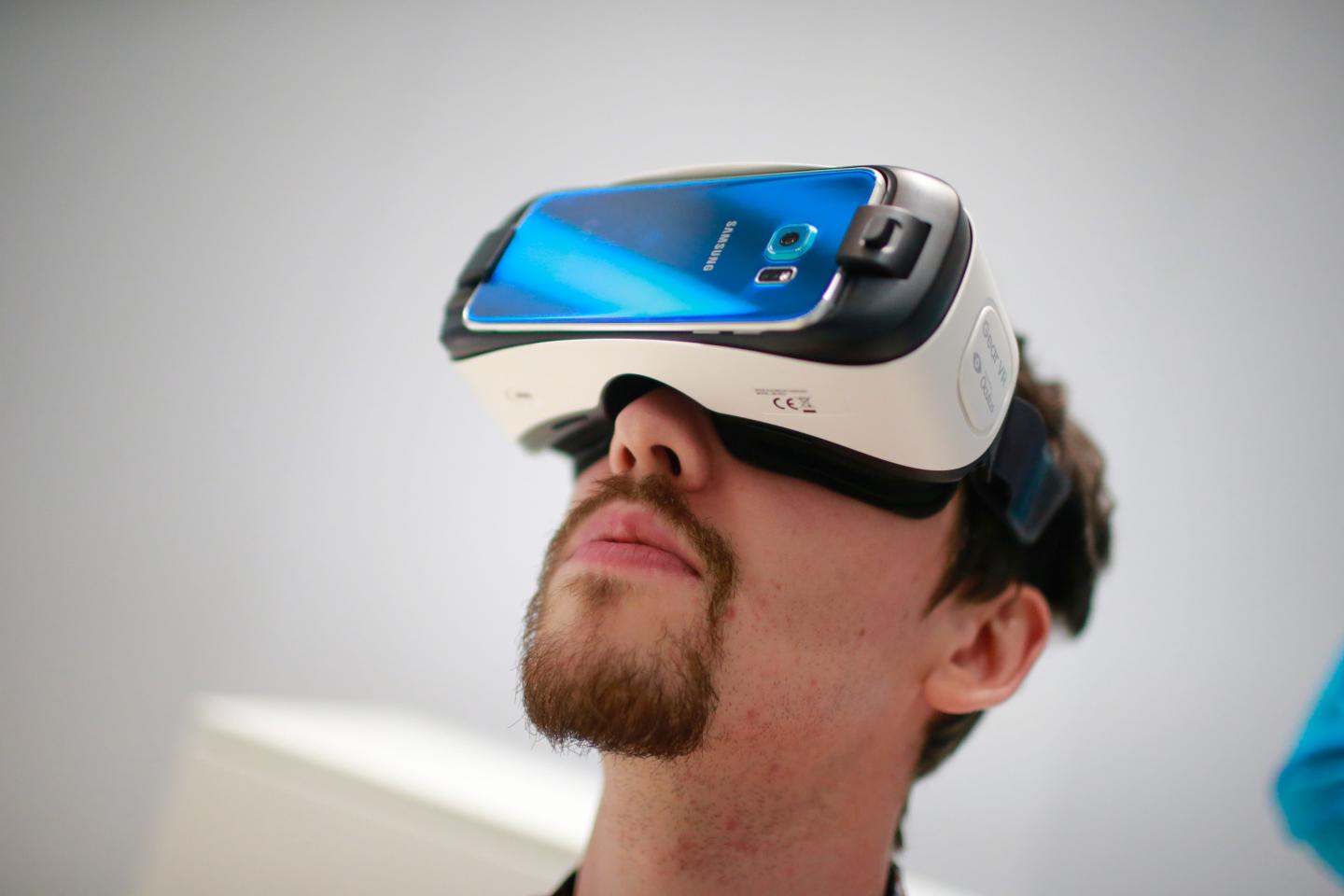
A visitor wears a Samsung Gear VR virtual reality headset in the Samsung Electronics Co. pavilion at the Mobile World Congress in Barcelona, Spain, on Tuesday, March 3, 2015. The event, which generates several hundred million euros in revenue for the city of Barcelona each year, also means the world for a week turns its attention back to Europe for the latest in technology, despite a lagging ecosystem. Photographer: Pau Barrena/Bloomberg via Getty ImagesBloomberg Bloomberg via Getty Images

It’s official—virtual reality, or VR technology, is the hot, new trend in media circles. The New York Times (NYT) recently sent Google Cardboard VR headsets to a million subscribers so the readers could experience The Displaced, a special VR feature on the plight of European refugees. Meanwhile, the Associated Press is working on a series of news features for VR. And YouTube has said it also wants to bring VR to anyone with a smartphone.

VR’s potential as a tool for immersive journalism is clearly immense. But there are also risks, as New York Times public editor Margaret Sullivan pointed out in a recent column. In particular, we need to make sure to keep the “reality” part of the term “virtual reality,” and to think carefully about what that means from a journalistic perspective.

Judging by some of the comments the Times has received on its Displaced project so far, a number of people were touched by the feature in a way they likely wouldn’t have been by a traditional photo series in the printed newspaper. And that’s probably not surprising, given the nature of the technology.

Instead of simply looking at photos or reading text, VR allows a viewer to experience a piece of journalism from the inside. This is done through the use of 360-degree video and/or virtual re-enactments of a scene broadcast onto a headset like the Oculus Rift (which is owned by Facebook (FB)), or even using low-tech means like the Google (GOOG) Cardboard viewer, which essentially just holds a smartphone in front of the watcher’s eyes.

VR can significantly change the way a person looks at a story, since they are more likely to feel as though they are part of it, rather than just a passive observer. Obviously, this kind of empathy can be a tremendously powerful tool. But it can also pose a risk to the traditional journalistic perspective of objectivity.

Sullivan discussed this point in her column, by responding to concerns raised by a number of readers. One such alarm was raised by Robert Kaiser, the former managing editor of The Washington Post, who said he was worried about the risk that stories told through VR “will often be based on tricks and deceptions by photographers/cameramen.”


In other words, because VR lets reporters, photographers, and videographers create a simulated version of a specific event, it could easy let them distort what happened and give a false impression of that event. That impression, in turn, would become more powerful due of the nature of the immersive technology.

Think about a VR version of the night that Michael Brown was shot by a police officer in Ferguson, Mo. The shooting quickly became a highly-charged political event, and one in which there were multiple versions of what happened—many of them completely contradictory. A virtual or immersive-reality feature on this story could easily distort the way that people feel about what happened.

Nonny de la Peña, an L.A.-based journalist and pioneer in VR film-making, created a 3D virtual representation of the night that Trayvon Martin was killed, and has also made an immersive film focused on the refugee crisis in Syria. She has talked about the risks of manipulating viewers through VR, and how the immersive nature of the experience can heighten this risk.

Some kinds of VR can lessen this problem, by providing multiple viewpoints from which a user can choose to view an event — something that Fusion’s version of the story tried to do. But other kinds of VR can reinforce the problem by giving a viewer only a specific version of the events (Tom Kent of the Associated Press has written about some of these ethical challenges).

Jake Silverstein, who was in charge of the New York Times project, told Sullivan he and his team were aware that there are a “whole host of ethical considerations and standards issues that have to be grappled with.” The paper’s standards editor, Philip Corbett, went through the piece frame by frame to make sure it fairly represented reality, and even recommended that a specific scene be removed because the photographer “was too active in re-arranging things,” he told Sullivan.

As Sullivan’s piece also pointed out, traditional video journalism has had to struggle with similar kinds of issues over the years, such as the use of “B-roll,” footage that is often shot after a report has already been researched, B-roll will typically show the scene, a subject walking towards the camera, or a reaction shot of the journalist. To some extent, these are “faked” shots, but they are widely used on television.

Ultimately, journalists and audiences must come to some kind of agreement on what is acceptable in the new world of immersive and VR journalism, and determine what kinds of film-making behavior are too manipulative. And the more we talk about that debate as it occurs, the better off we will be.

You can follow Mathew Ingram on Twitter at @mathewi, and read all of his posts here or via his RSS feed. And please subscribe to Data Sheet, Fortune’s daily newsletter on the business of technology.

About the Author
By Mathew Ingram
See full bioRight Arrow Button Icon

Latest in Tech

Finance
Lorem ipsum dolor sit amet, consectetur adipiscing elit, sed do eiusmod tempor incididunt ut labore et dolore magna aliqua. Ut enim ad minim veniam
By Fortune Editors
October 20, 2025
Finance
Lorem ipsum dolor sit amet, consectetur adipiscing elit, sed do eiusmod tempor incididunt ut labore et dolore magna aliqua. Ut enim ad minim veniam
By Fortune Editors
October 20, 2025
Finance
Lorem ipsum dolor sit amet, consectetur adipiscing elit, sed do eiusmod tempor incididunt ut labore et dolore magna aliqua. Ut enim ad minim veniam
By Fortune Editors
October 20, 2025
Finance
Lorem ipsum dolor sit amet, consectetur adipiscing elit, sed do eiusmod tempor incididunt ut labore et dolore magna aliqua. Ut enim ad minim veniam
By Fortune Editors
October 20, 2025
Finance
Lorem ipsum dolor sit amet, consectetur adipiscing elit, sed do eiusmod tempor incididunt ut labore et dolore magna aliqua. Ut enim ad minim veniam
By Fortune Editors
October 20, 2025
Finance
Lorem ipsum dolor sit amet, consectetur adipiscing elit, sed do eiusmod tempor incididunt ut labore et dolore magna aliqua. Ut enim ad minim veniam
By Fortune Editors
October 20, 2025

Most Popular

Finance
Lorem ipsum dolor sit amet, consectetur adipiscing elit, sed do eiusmod tempor incididunt ut labore et dolore magna aliqua. Ut enim ad minim veniam
By Fortune Editors
October 20, 2025
Finance
Lorem ipsum dolor sit amet, consectetur adipiscing elit, sed do eiusmod tempor incididunt ut labore et dolore magna aliqua. Ut enim ad minim veniam
By Fortune Editors
October 20, 2025
Finance
Lorem ipsum dolor sit amet, consectetur adipiscing elit, sed do eiusmod tempor incididunt ut labore et dolore magna aliqua. Ut enim ad minim veniam
By Fortune Editors
October 20, 2025
Finance
Lorem ipsum dolor sit amet, consectetur adipiscing elit, sed do eiusmod tempor incididunt ut labore et dolore magna aliqua. Ut enim ad minim veniam
By Fortune Editors
October 20, 2025
Finance
Lorem ipsum dolor sit amet, consectetur adipiscing elit, sed do eiusmod tempor incididunt ut labore et dolore magna aliqua. Ut enim ad minim veniam
By Fortune Editors
October 20, 2025
Finance
Lorem ipsum dolor sit amet, consectetur adipiscing elit, sed do eiusmod tempor incididunt ut labore et dolore magna aliqua. Ut enim ad minim veniam
By Fortune Editors
October 20, 2025
Fortune Secondary Logo
Rankings
  • 100 Best Companies
  • Fortune 500
  • Global 500
  • Fortune 500 Europe
  • Most Powerful Women
  • Future 50
  • World’s Most Admired Companies
  • See All Rankings
Sections
  • Finance
  • Fortune Crypto
  • Features
  • Leadership
  • Health
  • Commentary
  • Success
  • Retail
  • Mpw
  • Tech
  • Lifestyle
  • CEO Initiative
  • Asia
  • Politics
  • Conferences
  • Europe
  • Newsletters
  • Personal Finance
  • Environment
  • Magazine
  • Education
Customer Support
  • Frequently Asked Questions
  • Customer Service Portal
  • Privacy Policy
  • Terms Of Use
  • Single Issues For Purchase
  • International Print
Commercial Services
  • Advertising
  • Fortune Brand Studio
  • Fortune Analytics
  • Fortune Conferences
  • Business Development
  • Group Subscriptions
About Us
  • About Us
  • Editorial Calendar
  • Press Center
  • Work At Fortune
  • Diversity And Inclusion
  • Terms And Conditions
  • Site Map
Fortune Secondary Logo
  • About Us
  • Editorial Calendar
  • Press Center
  • Work At Fortune
  • Diversity And Inclusion
  • Terms And Conditions
  • Site Map
  • Facebook icon
  • Twitter icon
  • LinkedIn icon
  • Instagram icon
  • Pinterest icon

Latest in Tech

andrew yang
AITaxes
Ex-presidential candidate Andrew Yang says it’s time to ‘stop taxing labor’ and make AI foot the bill instead
By Jake AngeloMarch 13, 2026
3 hours ago
Big Techchief executive officer (CEO)
BlackRock’s Larry Fink predicts AI bankruptcies: ‘That’s capitalism’
By Marco Quiroz-GutierrezMarch 13, 2026
3 hours ago
Stressed worker on laptop
SuccessWork
AI promised supreme productivity, but it’s actually straining workloads for employees—time spent emailing has doubled, and focused work sessions fell by 9%
By Emma BurleighMarch 13, 2026
6 hours ago
robots
InnovationRobots
More people will own a humanoid robot than a car by 2060, BofA predicts
By Nick LichtenbergMarch 13, 2026
7 hours ago
shetti
CommentarySoftware
Why right now is the best time ever to work in software
By Milan ShettiMarch 13, 2026
8 hours ago
C-SuiteNext to Lead
Meet the executive behind AT&T’s $250 billion bid to become essential AI infrastructure
By Ruth UmohMarch 13, 2026
8 hours ago

Most Popular

placeholder alt text
Personal Finance
The national debt isn't $39 trillion. One economist says it's actually $100 trillion
By Nick LichtenbergMarch 13, 2026
14 hours ago
placeholder alt text
Economy
'This cannot be sustainable': The U.S. borrowed $50 billion a week for the past five months, the CBO says
By Eleanor PringleMarch 10, 2026
3 days ago
placeholder alt text
North America
The U.S. Mint dropped the olive branch from the dime. What does that mean for the country?
By Catherina GioinoMarch 12, 2026
22 hours ago
placeholder alt text
AI
'Proceed with caution': Elon Musk offers warning after Amazon reportedly had mandatory meeting to address 'high blast radius' and AI-related incidents
By Sasha RogelbergMarch 11, 2026
2 days ago
placeholder alt text
Future of Work
'I don't know if we're ready': Governors from each party appalled at 100-year-old federal workforce strategy
By Catherina GioinoMarch 12, 2026
1 day ago
placeholder alt text
Economy
Trump's immigration crackdown is backfiring by hurting the U.S.-born workers it was meant to help, data shows
By Sasha RogelbergMarch 10, 2026
3 days ago

© 2026 Fortune Media IP Limited. All Rights Reserved. Use of this site constitutes acceptance of our Terms of Use and Privacy Policy | CA Notice at Collection and Privacy Notice | Do Not Sell/Share My Personal Information
FORTUNE is a trademark of Fortune Media IP Limited, registered in the U.S. and other countries. FORTUNE may receive compensation for some links to products and services on this website. Offers may be subject to change without notice.